Tripura Rural Economic Growth and Service Delivery Project
AGARTALA: The Tripura Rural Economic Growth and Service Delivery Project (TRESP), funded by the World Bank at a cost of Rs 1400 Crores in an 80:20 ratio, is currently being implemented in the state of Tripura under the Tribal Welfare Department. The initiative spans across 23 tribal-dominated blocks, including 12 aspirational and 11 non-aspirational blocks, with the goal of benefiting 75,000 families in tribal areas.
TRESP is a multi-sectoral project focusing on various domains including agriculture, horticulture, livestock, fishery, education and roads. A State Project Management Unit (PMU) oversees the project, supported by seven Project Implementing Units (PIUs) from various departments such as Agriculture, Fisheries, Water Resources and Education.
The livelihood component of TRESP aims to establish 2,500 producer groups across agriculture, fishery, and animal husbandry sectors, as well as 61 cluster-level federations and community-managed training centers in all 23 blocks over a six-year period commencing in 2024. The project also plans to enhance infrastructure by constructing 88 roads in tribal regions.
In the education sector, TRESP is focused on teachers' professional development, including training for curriculum development and assessment mechanisms to ensure educational quality in tribal areas. Currently, 16 school buildings are under construction in autonomous council regions, with four nearing completion and others in various stages of bidding.
The project demonstrates significant progress, with over 1,550 producer groups established, many receiving working capital and establishment funds. Training has been provided to around 12,000 teachers with four school buildings and four roads in advanced stages of completion. Additionally, TRESP includes financial support for community-managed training centers, model cluster-level federations, farmers' producer organisations and custom hiring centers to stimulate livelihood and economic development, particularly for women farmers.
The project also incorporates a core competency-based training program for government officials, enhancing the service delivery mechanism in tribal areas. The implementation of Model Village Development Plans (VDPs) using participatory methods ensures that village communities are directly involved in the planning process, supporting holistic development efforts. Continuous guidance and monitoring from state-level specialists aim to ensure effective and timely execution of all project activities across the districts and blocks.
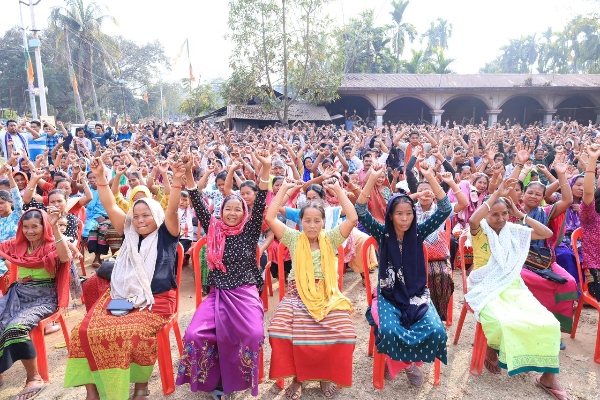
Image: For representational purpose only.