Of tribes and times
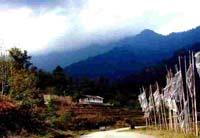
Sikkim, that tiny outcrop in the eastern Himalayas, is a little jewel that makes an interesting contribution to the bewildering cultural and ethnic diversity of India. On the face of it, Sikkim has always seemed an idyllic, lost- in- the clouds abode of beatific Buddhist monks and smiling inscrutable mongoloid people. Despite the impression of
an ethereal placidity, Sikkim's history, especially in the last six centuries has been quite eventful. Migrations from Tibet, wars with Bhutan in the east and with Nepal in the west, the Gorkha incursions, parley with the British… Sikkim's past is as checkered as that of any other region in the subcontinent (barring of course, the North West!).
The ethnic cocktail of Sikkim is a mix of the Lepchas, the Bhutias, the Limboos, the Tamangs, the Nepalese and a host of plains people. The original dwellers of Sikkim are supposed to be the Lepchas who ventured into Sikkim from either Assam or Burma or from Tibet in some distant past. Lepchas practice the Bon faith, an animistic shamanistic religion. It probably flowered in Central Asia at the dawn of human civilization and flourished in the subcontinent from eastern Afghanistan to Sikkim and beyond. Bon faith as practiced in Tibet influenced Buddhism and was transformed by it in return. The only Bon monastery I have seen in Sikkim is the one in Kewzing. There is one near Solan in Himachal Pradesh too, but that is of recent origin.
According to the Lephcas or the Rong as they call themselves, they are the children of Kanchendzonga, the third highest peak of the world. The Lepchas call it king-tzum-song -bu meaning, the highest over the head. The bon faith is a primordial religion, a throwback to a time when man had a reverential attitude to nature and had not yet learnt to dam the rivers and blast the hills. Perhaps, we could take lessons in co-existence with nature from the mountain worshipping and river loving Lepchas.
Intriguingly, the hunting Lepchas are bigger built and show fewer mongoloid features as compared to the farming ones. The Lepchas I am told, are happy amiable people. Why not, after all, their God is called RUM! There is a well guarded Lepcha village near Rang Rang. Here, the Teesta winds down from the chilly environs of Chungthang towards the pleasantly lush cardamom hills of Mangan. Approachable by a foot bridge, the Lepcha village is spread over the mountainside and is off limits to all but the Lepcha residents. I should know. My son tried. Driven by the insatiable curiosity of a ten year old for all things forbidden, he had skittered down the hill, crossed the foot bridge and was turned back firmly by the police guarding the entrance of the village.
It was at Rang Rang, more than five centuries ago, that the Lepchas and the Bhutias signed a brotherhood pact that was sealed in blood. It allowed the Buddhist Bhutias of Tibet to settle down in “Denzong”, as they called Sikkim. The Bhutias honored the pact by proliferating and gaining a demographic upper hand. The Buddhist sects that came with the Bhutias set up colourfully frescoed gomphas and monasteries all over the region: From the remote Lachen in the north to Tashi Ding and Pemayangtse in the west to Rumtek in the east and Ralang in the south. Finally, by establishing the Chogyal dynasty, the Bhutias fulfilled prophesy of guru Padmasamabhava, the eighth century founder of Tantric Mahayana in Tibet, of a Buddhist kingdom in Sikkim.
July 2009
The author is a member of Citizen News Service (CNS) Writers' Bureau. Email: [email protected]